Sinigang na Baboy Recipe: Classic Filipino Sour Pork Soup (with Hipon Variation)
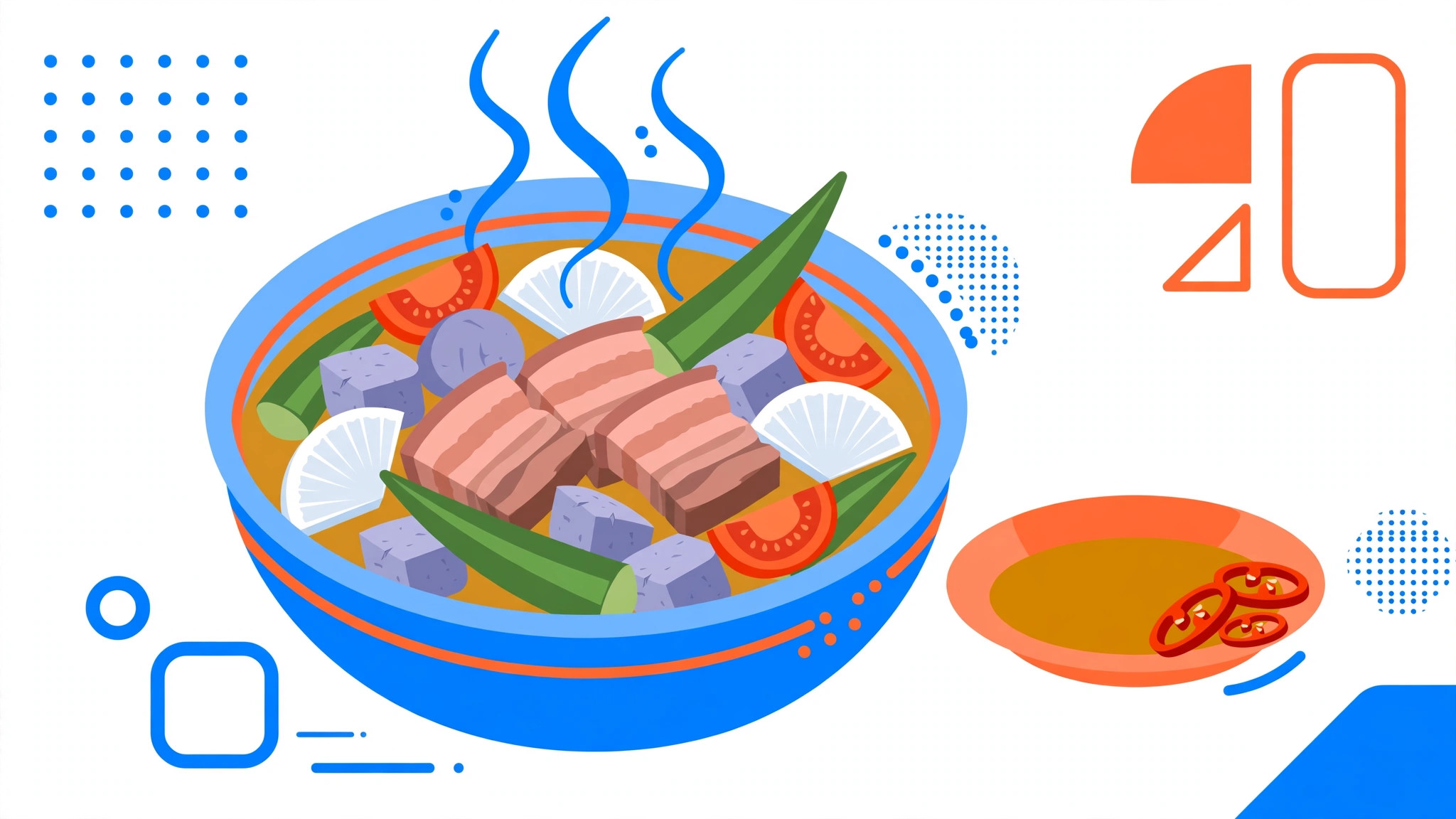
Sinigang na baboy is pork — usually belly or ribs — simmered until tender in a sour tamarind broth with gabi (taro), labanos (daikon radish), sitaw (long beans), okra, and kangkong (water spinach), seasoned with patis (fish sauce). It takes about 1 hour 40 minutes from start to finish, serves 6 people, and the whole pot is built around one rule: sour first, salt second, vegetables last. This recipe uses the everyday shortcut most Filipino households rely on — a pack of sinigang sa sampalok mix — plus a from-scratch fresh tamarind option, and a shrimp version, sinigang na hipon, at the end.
What makes a good sinigang
Sinigang is the Philippines' most cooked sour soup, and the sourness is the whole point. The classic souring agent is sampalok (tamarind). Fresh tamarind gives a rounder, fruitier sourness; the powdered mix gives a consistent, sharp sourness and is what most home cooks reach for on a weeknight. Other traditional souring agents are kamias (bilimbi), bayabas (guava), and calamansi — each one makes a recognizably different sinigang.
Three things separate a good sinigang from a mediocre one:
- Tender pork, not boiled-to-death pork. Belly or ribs simmered gently until they yield to a fork, never boiled hard.
- Sourness you can adjust. Add the souring agent in stages and taste. You can always add more sour; you cannot take it back.
- Vegetables added in order of cooking time. Gabi and labanos go in early because they take time to soften; kangkong goes in last because it wilts in two minutes.
Serve it hot with steamed white rice and a small saucer of patis with crushed siling labuyo on the side for dipping.
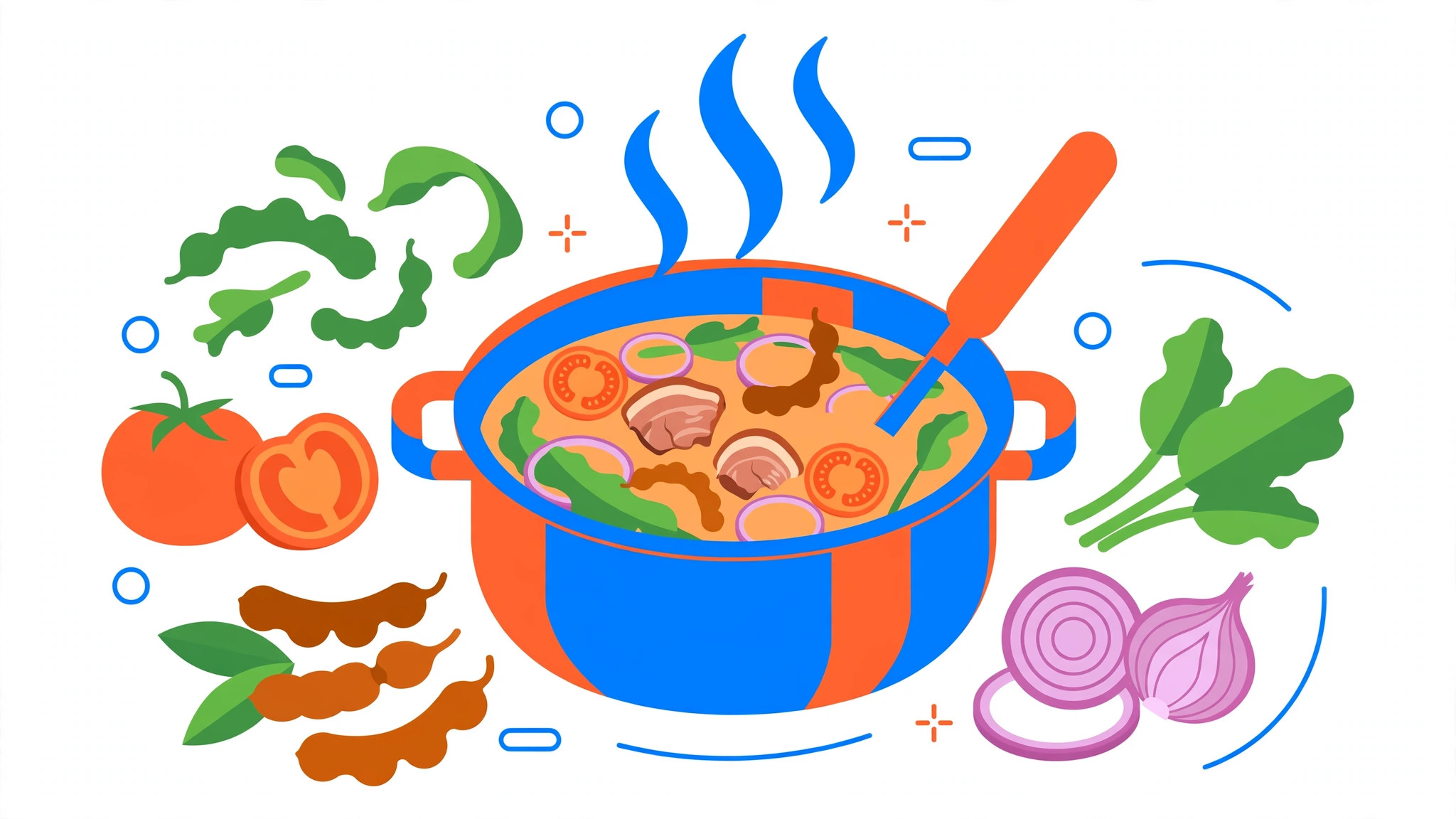
Ingredients (serves 6)
Checklist — for the soup:
Checklist — for the vegetables:
To serve:
| Ingredient | Amount | What it does |
|---|---|---|
| Pork belly or ribs | 1 kg | The body of the soup; belly is richer, ribs are leaner with more bite |
| Sinigang mix | 2 × 20 g packs | The sour backbone — tamarind flavor, salt, and seasoning in one |
| Gabi (taro) | 2 pieces | Thickens the broth slightly and turns soft and starchy |
| Labanos (daikon) | 1 cup | Adds a mild peppery sweetness that balances the sour |
| Sitaw, okra, kangkong | As listed | The classic vegetable trio; each adds a different texture |
| Patis (fish sauce) | 3 tbsp | The salt — and the umami that makes the broth taste "complete" |
| Siling pansigang | 3 pieces | Mild heat and aroma; not spicy like siling labuyo |
Equipment: a large pot or kaserola (at least 4 liters), a ladle, a knife and chopping board. No special equipment is needed.
How to cook sinigang na baboy
- Start the broth. Pour 8 cups of water into the pot. Add the quartered onion and tomatoes. Bring to a boil over medium-high heat and cook for 5 to 8 minutes, until the tomatoes soften and the water takes on their color.
- Add the pork. Put the pork belly cubes into the pot. Let it return to a boil, then lower the heat to a gentle simmer. Skim off the gray scum that rises to the surface in the first 10 minutes — this keeps the broth clear and clean-tasting.
- Simmer until nearly tender. Cover and cook on low to medium heat for about 25 to 30 minutes. The pork should be starting to soften but not yet falling apart.
- Add the gabi. Put in the peeled taro and continue to simmer for another 20 to 30 minutes, until the pork is very tender and the gabi is soft all the way through. Poke the gabi with a fork — it should give easily.
- Add the souring and seasoning. Stir in the two packs of sinigang mix, the fish sauce, and the ground black pepper. Taste the broth now. It should be distinctly sour with a savory backbone. If you want it more sour, add half a pack more of mix; if it is too sour, add a little water and a pinch more patis.
- Add the labanos. Put in the sliced daikon radish and cook for 3 to 5 minutes, until it is just tender but still has a little bite.
- Add the quick-cooking vegetables. Add the siling pansigang, okra, and sitaw. Cook for about 7 minutes.
- Finish with the kangkong. Add the kangkong leaves last and cook for only 1 to 2 minutes, just until wilted. Turn off the heat immediately — overcooked kangkong turns dark and slimy.
- Serve. Ladle into bowls while steaming hot, with rice on the side and patis with crushed siling labuyo for dipping.
Total time: about 10 minutes prep, 1 hour 30 minutes cooking — roughly 1 hour 40 minutes all in.
Using fresh sampalok instead of the mix
If you have fresh tamarind, the flavor is deeper and less sharp than the powdered mix. Here is how to swap it in:
- Take about 15 pieces of fresh sampalok. Boil them in 1 cup of water for a few minutes until soft.
- Mash the tamarind in the water, then strain the liquid through a sieve, pressing the pulp to extract all the juice. Discard the seeds and fibers.
- Pour the strained tamarind juice into the pot at step 5, in place of the sinigang mix.
- Season with patis and a little salt to taste, since fresh tamarind adds sourness but no salt.
Because fresh tamarind varies in sourness, add the juice a little at a time and taste as you go.
Sinigang na hipon (shrimp variation)
The same method works beautifully with shrimp — it just cooks much faster, so the order changes.
| Sinigang na baboy | Sinigang na hipon | |
|---|---|---|
| Main protein | 1 kg pork belly or ribs | 1 kg large shrimp (hipon), heads on if possible |
| Cooking time for the protein | 50–60 minutes simmering | 3–5 minutes only |
| Souring | 2 packs sinigang mix | 1 to 1 1/2 packs — shrimp broth turns sour faster |
| Best vegetables | Gabi, labanos, sitaw, okra, kangkong | Labanos, sitaw, kangkong, tomato; skip the gabi or use less |
| Broth character | Rich, slightly thick from the pork and gabi | Light, clean, and briny |
Steps for sinigang na hipon:
- Boil the water with onion and tomato, then add the labanos and simmer for 5 minutes.
- Stir in the sinigang mix and patis, then taste and adjust the sourness.
- Add the shrimp and cook for just 3 to 5 minutes, until they turn pink and curl. Overcooked shrimp turn rubbery, so watch them closely.
- Add the sitaw and kangkong, cook 1 to 2 minutes more, then serve immediately.
Other sinigang variations worth trying
| Variation | Souring agent | What changes |
|---|---|---|
| Sinigang sa kamias | Kamias (bilimbi) | Sharper, more aromatic sourness; add whole kamias with the pork |
| Sinigang sa bayabas | Guava (bayabas) | Softer, fruitier sourness; a Bulacan favorite, often with pork neck bones |
| Sinigang sa calamansi | Calamansi juice | Bright, citrusy sourness; add the juice near the end so the aroma stays fresh |
| Sinigang na bangus | Tamarind, with milkfish | Use bangus belly and head; add the fish in the last 10 minutes so it does not fall apart |
| Sinigang na baka | Tamarind, with beef | Use beef short ribs or shank and simmer longer — about 2 hours — until tender |
The template never changes: sour broth, one protein simmered until tender, hard vegetables early, leafy vegetables last.
Tips from Filipino kitchens
- Boil the pork once and throw the water away if you want a cleaner broth. Some cooks do a first quick boil, discard the water, then start again with fresh water. It removes extra fat and scum, at the cost of a little flavor.
- Never add the kangkong early. It is the single most common mistake. Two minutes is enough.
- Taste before adding more patis. The sinigang mix already contains salt. Season in small steps and taste after every addition.
- Use ripe tomatoes, not underripe ones. Ripe tomatoes break down into the broth and add a background sweetness that rounds out the sourness.
- Pork shoulder (kasim) works too if you prefer less fat than belly, and pork hock (pata) makes the richest broth of all — just allow extra simmering time.
- Leftovers improve overnight. The flavors settle and deepen. Reheat gently and add a handful of fresh kangkong when serving again.
Common mistakes to avoid
- Adding all the vegetables at once. Gabi needs 30 minutes; kangkong needs 2. Adding everything together means either hard gabi or mushy greens.
- Boiling hard the whole time. A rolling boil toughens pork and clouds the broth. Keep it at a gentle simmer once the pork is in.
- Adding the sinigang mix too early. The souring agent goes in after the pork is nearly tender. Added at the start, the acid can slow the meat from softening.
- Skipping the taste test. Every pack of mix, every batch of tamarind, and every pot of water is slightly different. Taste at step 5 and adjust — that is the whole skill of sinigang.
- Overcooking the shrimp version. Hipon goes from perfect to rubbery in about a minute. Pull the pot off the heat as soon as the shrimp curl and turn pink.
Serving and storing
Sinigang is a rice dish first and a soup second — always serve it with a mound of steamed white rice, and let people ladle broth over the rice as they eat. In many households the patis-and-sili saucer sits in the middle of the table for everyone to dip from.
Store leftovers in the refrigerator for up to 3 days. Remove the kangkong before storing if you can, since it wilts and darkens overnight. Reheat on the stove over medium heat until just simmering; add fresh kangkong or pechay when serving again. The broth also freezes well for up to a month — freeze the broth and pork without the vegetables, then add fresh vegetables when reheating.
Frequently asked questions
What is the difference between sinigang and nilaga? Both are boiled meat soups, but sinigang is defined by its sour broth (usually tamarind), while nilaga is a plain savory broth seasoned with patis and peppercorns, often with saba bananas and cabbage.
Can I use a pressure cooker? Yes. Cook the pork in the pressure cooker for 15 to 20 minutes instead of simmering for an hour, then transfer to a regular pot to add the souring agent and vegetables. Do not pressure-cook the vegetables.
What can I use instead of kangkong? Pechay (bok choy) is the easiest substitute and is common in many households. Spinach also works in a pinch, but add it at the very last minute.
Is sinigang healthy? It is one of the lighter Filipino ulam: a clear broth, lean-or-moderate protein, and a lot of vegetables. The main things to watch are the salt from the patis and mix, and the fattiness of pork belly — pork ribs or shoulder are leaner choices.
Why is my sinigang not sour enough? Either the mix was under-measured or the pot has too much water. Add half a pack more of sinigang mix, or a squeeze of calamansi, and let it simmer for 2 minutes before tasting again.
Can I cook sinigang without pork? Yes — sinigang na hipon (shrimp), sinigang na bangus (milkfish), and even a vegetable-only sinigang with gabi, labanos, and kangkong all follow the same method.
Sources: - Panlasang Pinoy, "Sinigang na Baboy with Gabi" (ingredients, quantities, cooking times) — https://panlasangpinoy.com/wprm_print/sinigang-na-baboy-with-gabi - Pinoy Taste Recipes, "Sinigang na Baboy Recipe" (1 kg pork belly, 8 cups water, 44 g sinigang mix, 6 servings) — https://pinoytasterecipes.com/sinigang-na-baboy-recipe/ - Kusina Secrets, "Authentic Sinigang na Baboy" (fresh tamarind method, 15 pieces sampalok) — https://kusinasecrets.com/authentic-sinigang-na-baboy/ - The Quirino Kitchen, "Sinigang na Baboy sa Bayabas and Sampalok" (guava-and-tamarind variation) — https://thequirinokitchen.com/wprm_print/sinigang-na-baboy-sa-bayabas-and-sampalok
Checked: 8 November 2026