Classic Chicken Adobo for 4 People: The Recipe, the Timing, and the Regional Versions
Ask ten Filipino families for their adobo and you'll get ten different answers — but the backbone never changes: chicken braised in vinegar and soy sauce with lots of garlic, bay leaves, and whole peppercorns until the sauce turns dark, glossy, and just thick enough to coat rice. For 4 people you need 1 kilo of chicken, about ½ cup each of vinegar and soy sauce, and a whole head of garlic. Budget about 15 minutes of prep and 35 to 45 minutes of cooking (plus an optional 30-minute marinade). Below is the classic version step by step, the rules that keep it from tasting raw or watery, and the regional variations — puti, dilaw, sa gata, and more — so you can find the adobo your own family will claim as theirs.
Ingredients for 4 people
Bone-in, skin-on chicken pieces (thighs and legs especially) give the richest sauce. Breast works, but watch the cooking time — it dries out faster.
| Ingredient | Amount for 4 people | Notes |
|---|---|---|
| Chicken, cut into serving pieces | 1 kg | Bone-in, skin-on preferred; rinse and drain well |
| Soy sauce | ½ cup (120 ml) | Regular Filipino soy sauce; adjust saltiness at the end |
| Vinegar (cane or coconut) | ½ cup (120 ml) | Sukang Iloko, cane, or coconut vinegar all work |
| Garlic | 1 whole head, crushed and peeled | Adobo is generous with garlic — don't reduce it |
| Dried bay leaves (dahon ng laurel) | 3–4 pieces | - |
| Whole black peppercorns | 1 teaspoon, lightly cracked | Ground pepper is a backup, whole is better |
| Water | 1 cup (240 ml) | Add more only if the sauce reduces too fast |
| Cooking oil | 2 tablespoons | For browning the chicken and garlic |
| Brown sugar | 1 teaspoon to 1 tablespoon, optional | Balances acidity; amount is a family preference |
| Onion | 1 medium, sliced, optional | Many families add it; purists skip it |
| Potatoes | 2 medium, quartered, optional | A common extender — fry or add midway so they don't dissolve |
On cost: in Metro Manila wet markets and supermarkets, a whole kilo of chicken plus the pantry basics (assuming you already have soy sauce, vinegar, and garlic at home) typically falls in an approximate range of ₱220–₱350 for the whole dish — treat this as a rough guide only, since chicken prices move with supply and differ per city and per market.
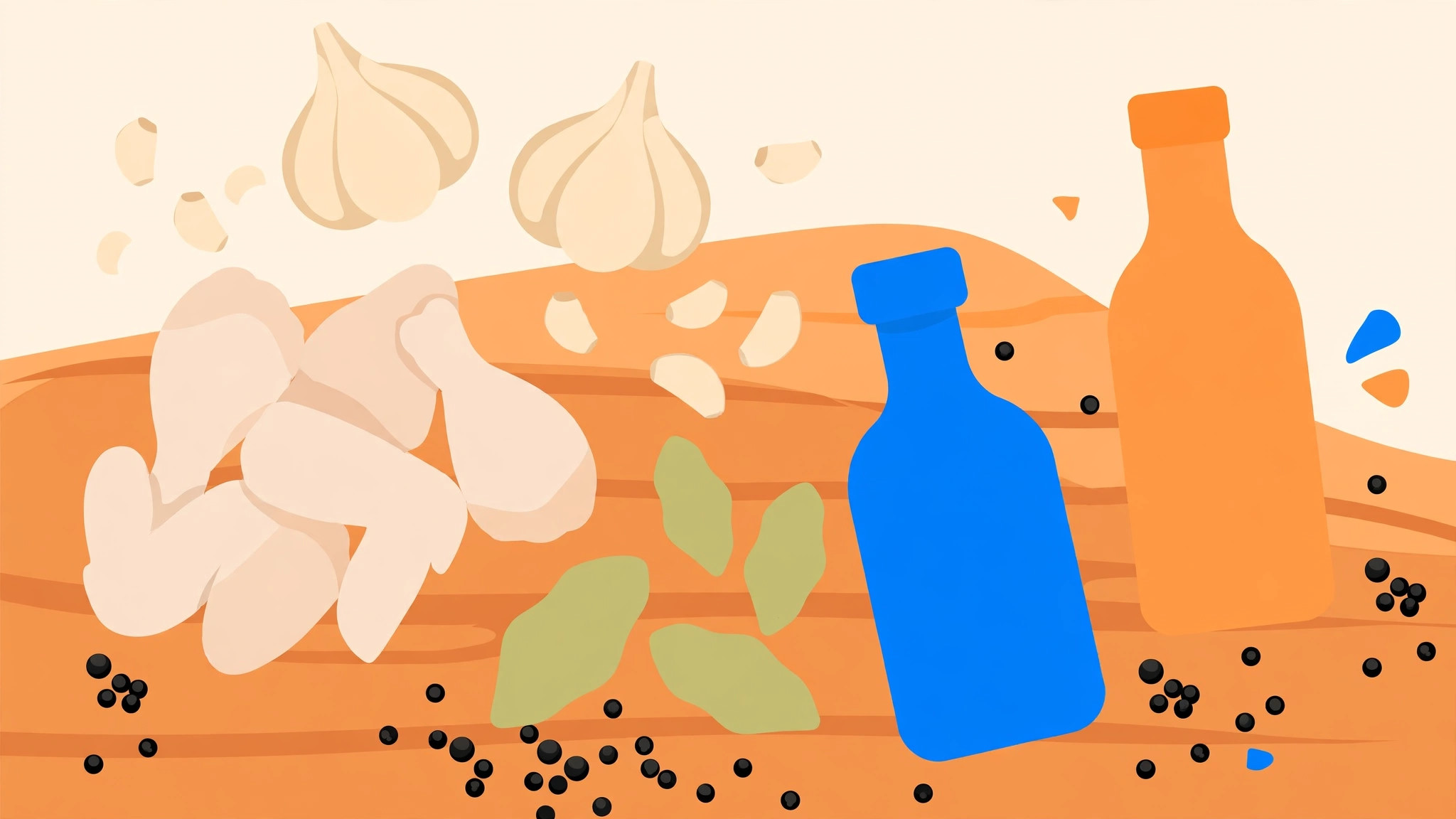
Optional first step: marinate (30 minutes to overnight)
Combine the chicken, soy sauce, half the garlic, bay leaves, and peppercorns in a bowl, mix, and refrigerate for at least 30 minutes (overnight gives the deepest flavor). This step is traditional in many households but not mandatory — if you're cooking adobo on a weeknight, you can go straight to the pot and the dish will still be unmistakably adobo.
How to cook it, step by step
- Brown the chicken (about 8–10 minutes). Heat the oil in a wide pot or kawali over medium-high heat. Lift the chicken out of the marinade (keep the marinade) and sear the pieces skin-side down until lightly golden. This step adds flavor and keeps the skin from turning rubbery. Set the chicken aside.
- Toast the garlic (about 1 minute). In the same pot, sauté the remaining garlic until fragrant and just golden — this is the flavor base.
- Return the chicken and add the liquids. Put the chicken back, pour in the reserved marinade, the vinegar, and the water, and add the bay leaves and peppercorns.
- Let the vinegar cook off — do not stir (about 3–5 minutes). Bring everything to a boil, then lower to a simmer and leave it alone. Stirring raw vinegar into the sauce early is the classic mistake that leaves adobo tasting harsh and "hilaw" (raw). Letting it boil undisturbed cooks off the sharp acidity first.
- Simmer until tender (about 25–30 minutes). Cover and simmer on low heat until the chicken is fully cooked and tender. If you're adding potatoes, put them in around the 15-minute mark so they cook through without falling apart.
- Reduce and season (about 5 minutes). Uncover, raise the heat slightly, and let the sauce reduce until it turns glossy and coats the back of a spoon. Stir in the sugar if using, then taste: add a splash of water if too salty, a little patis or soy sauce if flat, or a teaspoon more vinegar if it tastes dull.
- Rest and serve. Let it sit off the heat for 5 minutes. Serve over plenty of steamed rice, spooning the sauce on top, with the fried garlic bits if you made extra.
Total time: roughly 50–60 minutes including prep, or about 35–45 minutes of cooking without the marinade.
The rules that make adobo taste right
- Vinegar first, patience second. The single most repeated rule in Filipino kitchens: let the vinegar boil and simmer a few minutes before stirring. It separates good adobo from sour adobo.
- Garlic is a main ingredient, not a garnish. A whole head per kilo is standard; some families fry extra crushed garlic to sprinkle on top.
- Reduce the sauce, don't drown it. Adobo is a braise, not a soup. If your sauce is watery at the end, the fix is a few uncovered minutes of simmering, not more soy sauce.
- It tastes better tomorrow. Adobo is famous for improving overnight as the chicken absorbs the sauce — which is also why it's a classic baon and handaan dish. Refrigerate leftovers promptly and eat within about 3–4 days, reheating until steaming hot.
Regional variations worth trying
Adobo is a method more than a single recipe, and the regions guard their versions proudly:
| Version | Where it's known from | What changes |
|---|---|---|
| Adobong puti (white adobo) | Older, pre-soy-sauce style found in many areas | No soy sauce at all — salt or patis seasons it, so the sauce stays pale and the vinegar flavor leads |
| Adobong dilaw (yellow adobo) | Batangas and nearby areas | Turmeric (luyang dilaw) colors and flavors the dish; often little or no soy sauce |
| Adobo sa gata | Bicol | Coconut milk (gata) joins the braise, usually with siling labuyo or green chilies for heat — rich and spicy |
| Adobong pula (red adobo) | Various households/regions | Annatto (achuete) gives the sauce a reddish tint |
| Dry, vinegar-forward adobo | Ilocos-style cooking | Less sauce, cooked down further until the chicken nearly fries in its own rendered fat; assertively sour and salty |
| Sweet-style adobo | Common in Visayan households | Noticeably more sugar, sometimes with pineapple juice or chunks in modern family versions |
| Adobong manok at baboy | Everywhere | Half chicken, half pork (kasim or liempo) — the pork fat enriches the sauce; add the pork first since it needs a longer simmer |
A good way to explore: cook the classic version twice until it's muscle memory, then change exactly one thing — swap in gata, or drop the soy sauce for puti — so you can taste what each variation actually does.
Common mistakes
- Stirring the vinegar in right away. Covered above: let it boil undisturbed first, or the whole dish tastes raw and sharp.
- Using only chicken breast. Lean meat overcooks in a 30-minute braise and ends up stringy. Thighs forgive; breast needs a shorter simmer and should be added later.
- Too much soy sauce at the start. You can always add saltiness at the end; you can't take it out. Start with the recipe amount, reduce, then adjust.
- Skipping the browning step. Boiled-looking pale chicken is the usual result. Eight minutes of searing is what gives adobo its deep color and roasted flavor.
- Serving immediately off a watery sauce. If the sauce doesn't coat rice, it isn't done. Reduce it, or spoon the thin sauce over rice anyway and learn for next time — every family has made this batch.
Frequently asked questions
What vinegar is best for adobo? Cane vinegar and coconut vinegar are the most common choices and both work well. Sukang Iloko (sugarcane vinegar from Ilocos) is prized for a sharper, more complex sourness. Avoid using only plain white distilled vinegar at full strength if you find it harsh — it's noticeably more aggressive.
Can I make adobo without soy sauce? Yes — that's adobong puti. Season with salt or patis instead. The flavor is cleaner and more vinegar-forward, and many consider it the older form of the dish.
Why does restaurant adobo sometimes look almost black and sticky? Long reduction. Some cooks reduce the sauce until it thickens and darkens heavily (adobong tuyo style), and fried garlic is mixed back in. Home versions are usually saucier — neither is wrong.
How long does adobo keep? Refrigerated in a clean, covered container, it's generally at its best within about 3–4 days; the vinegar helps, but it isn't a preservative on its own. Freeze portions if you need to keep it longer, and always reheat until steaming.
Can I use this same recipe for pork? Yes. Use kasim (shoulder) or liempo (belly), and add about 10–15 minutes to the simmer so the pork turns tender. The beloved combo version uses half chicken and half pork in one pot.
My adobo is too salty / too sour. Can it be saved? Too salty: add water a little at a time and simmer briefly, or add the potatoes — they absorb salt as they cook. Too sour: a pinch or two of sugar and a slightly longer reduction usually rounds it out. Serve with extra rice; that's the traditional remedy for both.
Sources: - This recipe follows the widely documented classic Filipino chicken adobo method (vinegar–soy braise with garlic, bay leaf, and peppercorn; "do not stir the vinegar" technique) as recorded in Philippine cookbooks and Department of Agriculture–promoted regional recipe collections; regional variations (puti, dilaw of Batangas, adobo sa gata of Bicol, dry Ilocos-style) are standard entries in Philippine regional cuisine references. - General food-safety guidance on refrigerating cooked chicken leftovers (use within about 3–4 days) follows standard public food-safety recommendations.
Note: Market prices for chicken vary by city, season, and outlet; the cost above is an approximate range only, checked against typical Metro Manila market and supermarket price levels.
Checked: 8 November 2026